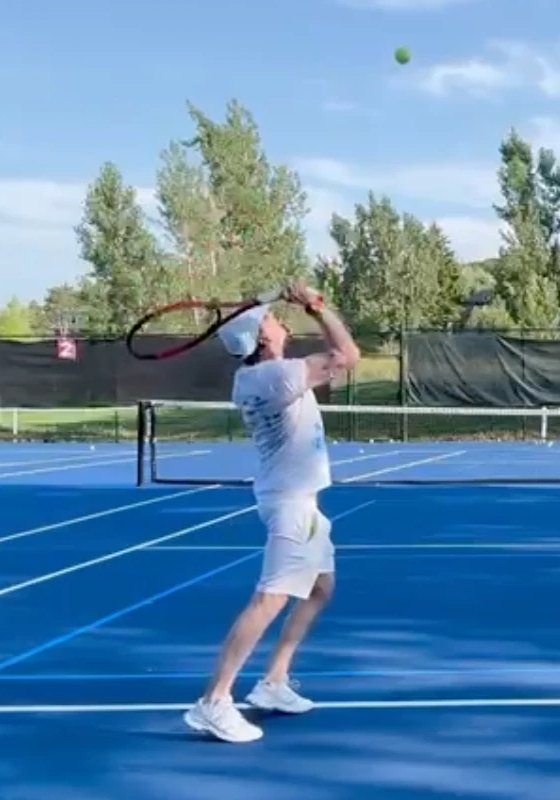
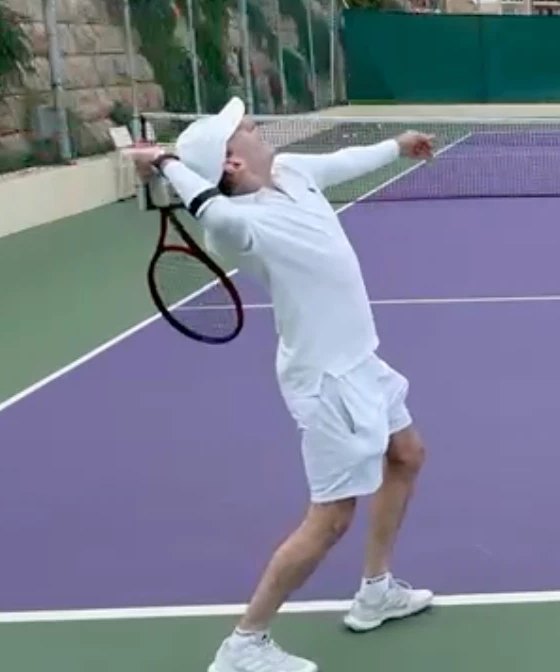
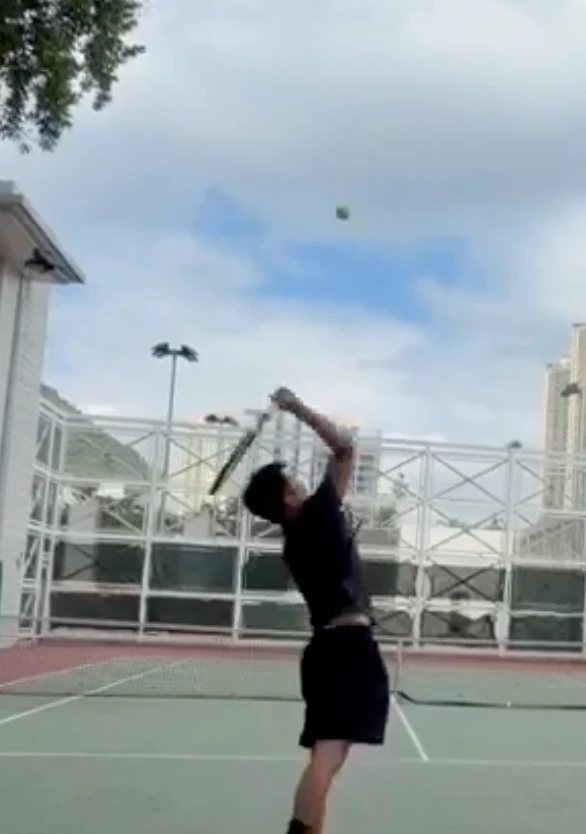
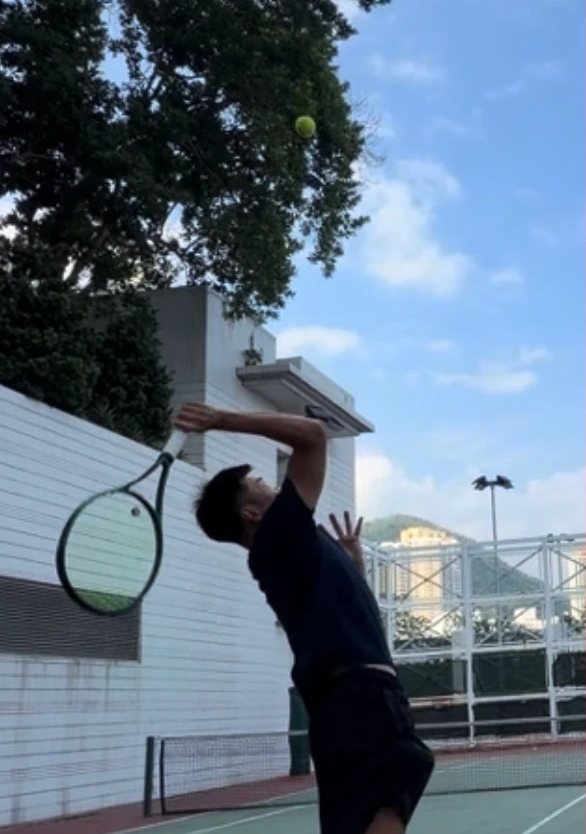
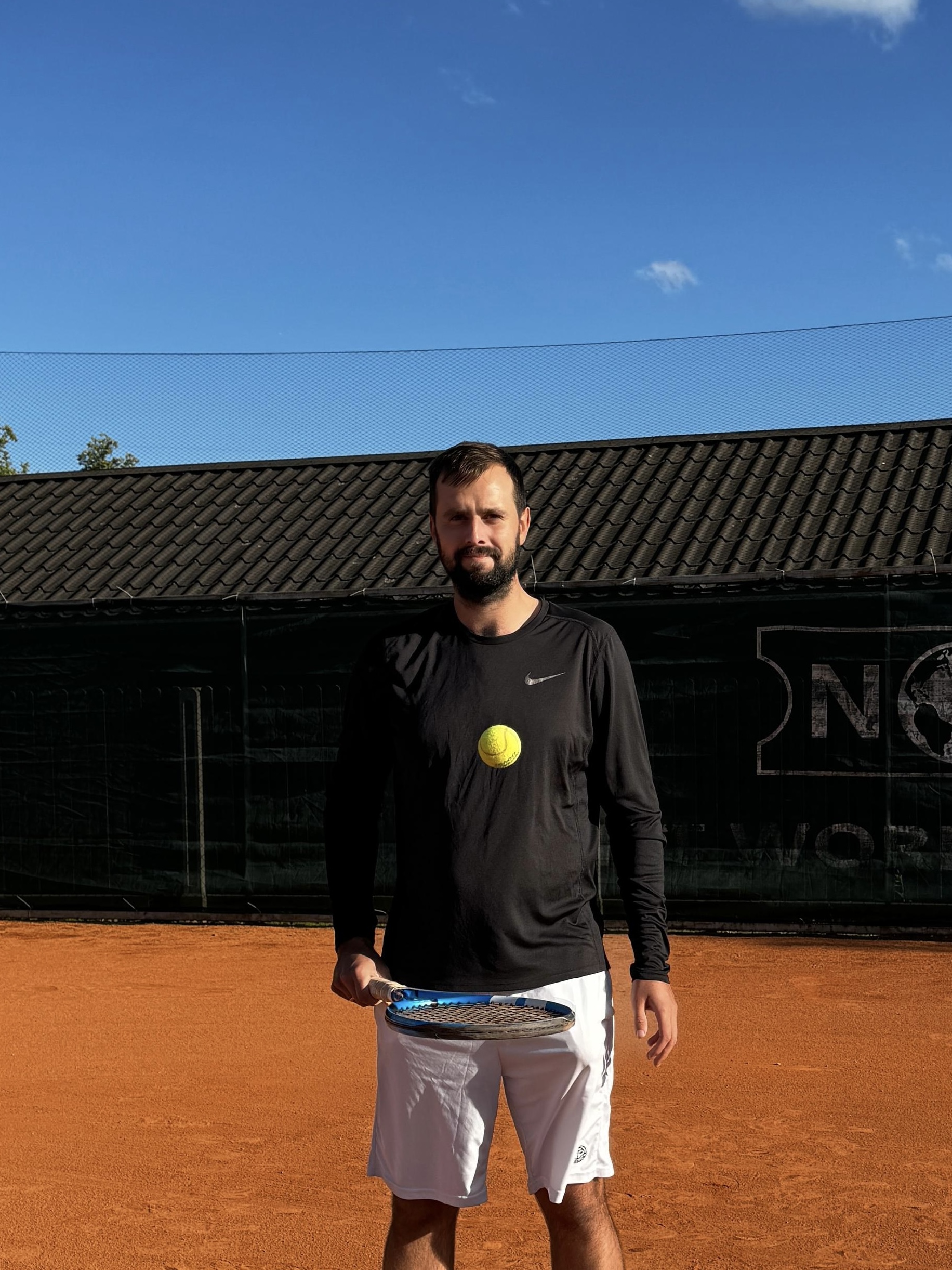
Free 45-Minute One-on-One Serve Diagnostics

Still Struggling With Your Serve After Lessons, YouTube, and Endless Practice?

Discover what’s holding your serve back, why previous fixes haven’t worked, and what to train first in a Free 1-on-1 Serve Diagnostics Session.
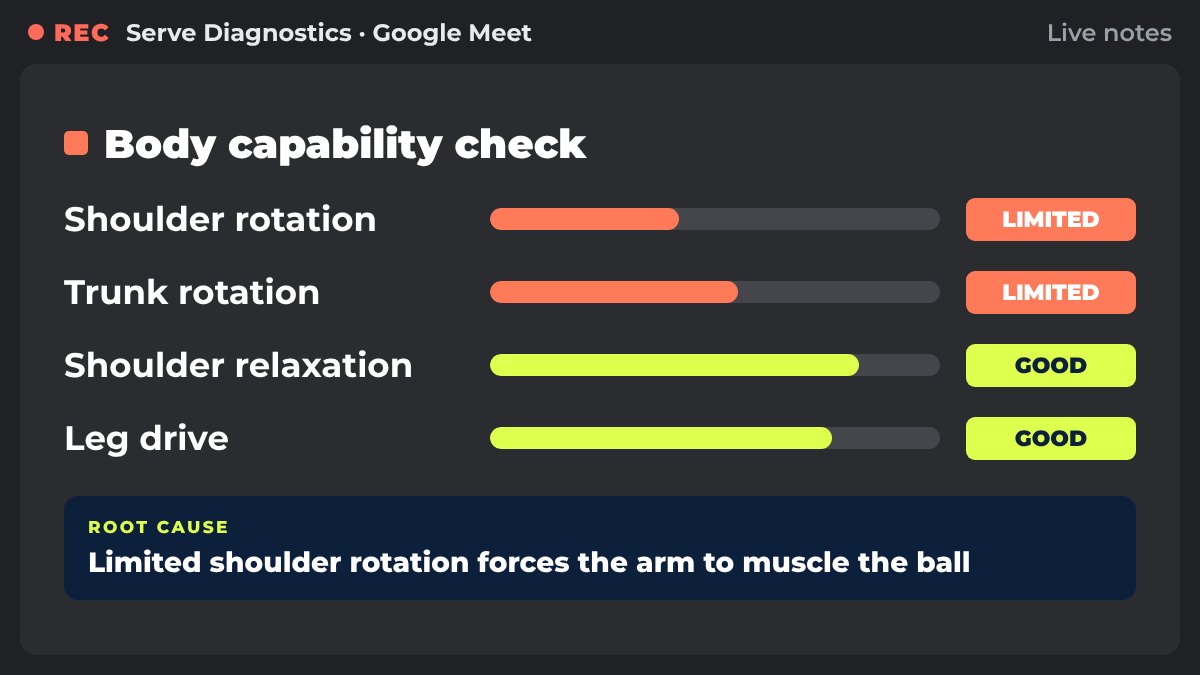
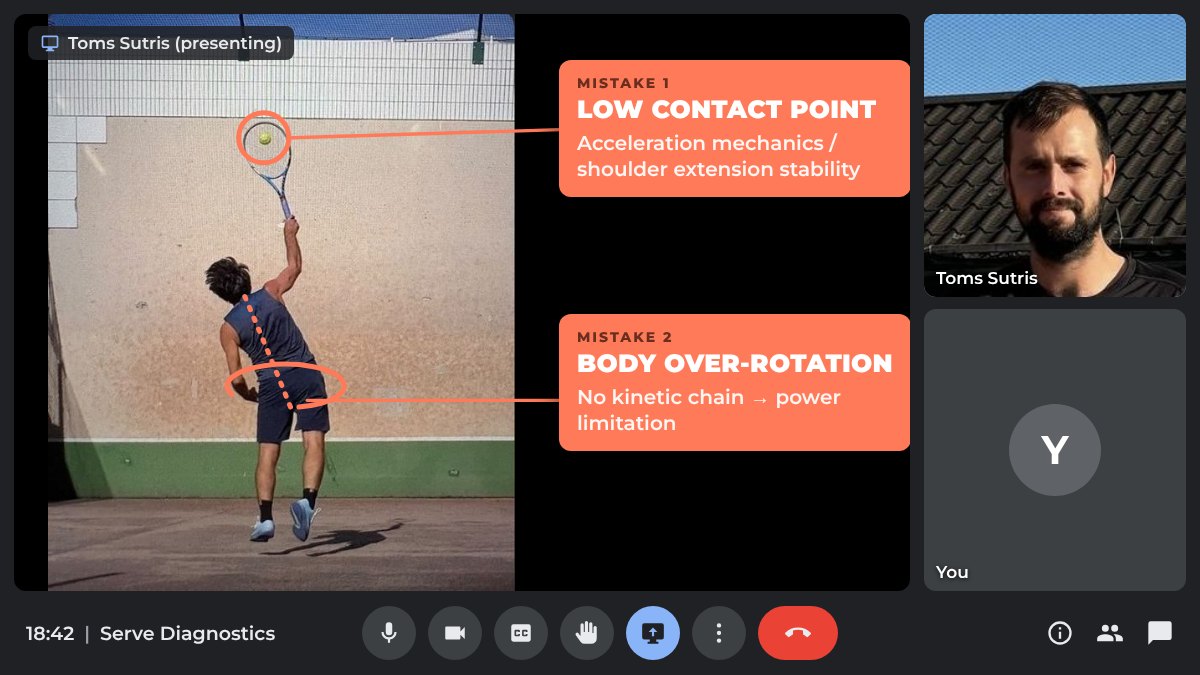
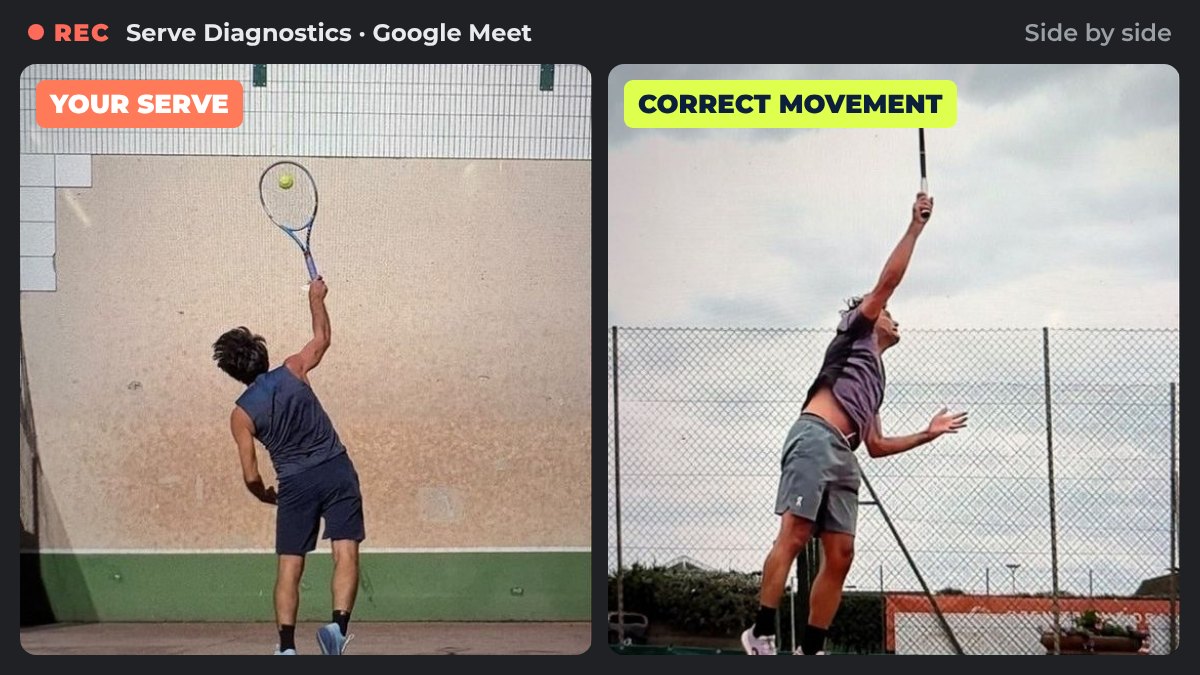
Body capability check during the call Google Meet call: Toms presenting the player's serve, marking a low contact point and body over-rotation The player's serve side by side with the correct movement
Your serve. Your specific limitations. A clear starting point.
Fill In the Form to Book Your SessionFree
Step 1 of 6 · takes 2 minutes

What’s your first name?

I review every application personally before the call.

Takes 2 minutes to apply · Personal video analysis · No credit card required

250+ serves diagnosed onlinePlayers in 20+ countries10+ years of coaching experience
You Know What You’re Doing Wrong. So Why Does Your Serve Keep Doing It?

You’ve been told to toss higher, rotate more, improve your racket drop, or stop opening your shoulders too early.

You’ve watched the tutorials. Taken the lessons. Practiced the corrections.

Maybe you can even perform the right movement without a ball.

But when you actually serve, the same mistakes return.

Here’s what most players are missing:

Knowing what your serve should look like isn’t the same as knowing how to make your body perform it.

A visible technical mistake doesn’t always tell you what’s causing it.

And if you’re working on the wrong thing, or trying to fix things in the wrong order, more practice may simply reinforce the movement you’re trying to change.

That’s why we start with a diagnosis, not another random drill.

Stop Guessing. Find Out What Your Serve Actually Needs.

This is a private, one-on-one video session where we’ll examine your actual serve and identify the most important problems to address.

01
See What’s Breaking Down

We’ll review your serve footage and look at the technical issues affecting your movement, consistency, and power.

You’ll see what’s happening in your serve, not just hear another generic correction.

02
Understand Why It’s Happening

We’ll investigate the possible causes behind those mistakes.

That may include movement patterns, physical limitations, timing, or difficulty transferring a correct movement into your full serve.

The goal is to understand what’s driving the problem, rather than only describing what it looks like.

03
Find Out Why Previous Fixes Haven’t Worked

We’ll look at the corrections and exercises you’ve already tried.

You’ll better understand why they may not have produced lasting changes, and whether you’ve been addressing the right problem in the first place.

04
Know What to Work on First

You’ll leave with a clearer direction for your training: what deserves attention first, what may need further assessment, and how the different changes fit together.

Not another list of random serve tips. A starting point based on your actual serve.

What Can Change When You Stop Guessing and Start Training the Right Things?

These players didn’t need more generic advice. They needed a structured approach to changing their serve.

Matt — USA 30% → 64% first serves in

Matt was working with a local pro but had hit a ceiling on his serve. Through structured serve training he more than doubled his first serves in, and became a lot more competitive.

▶ Hear it from Matt himself

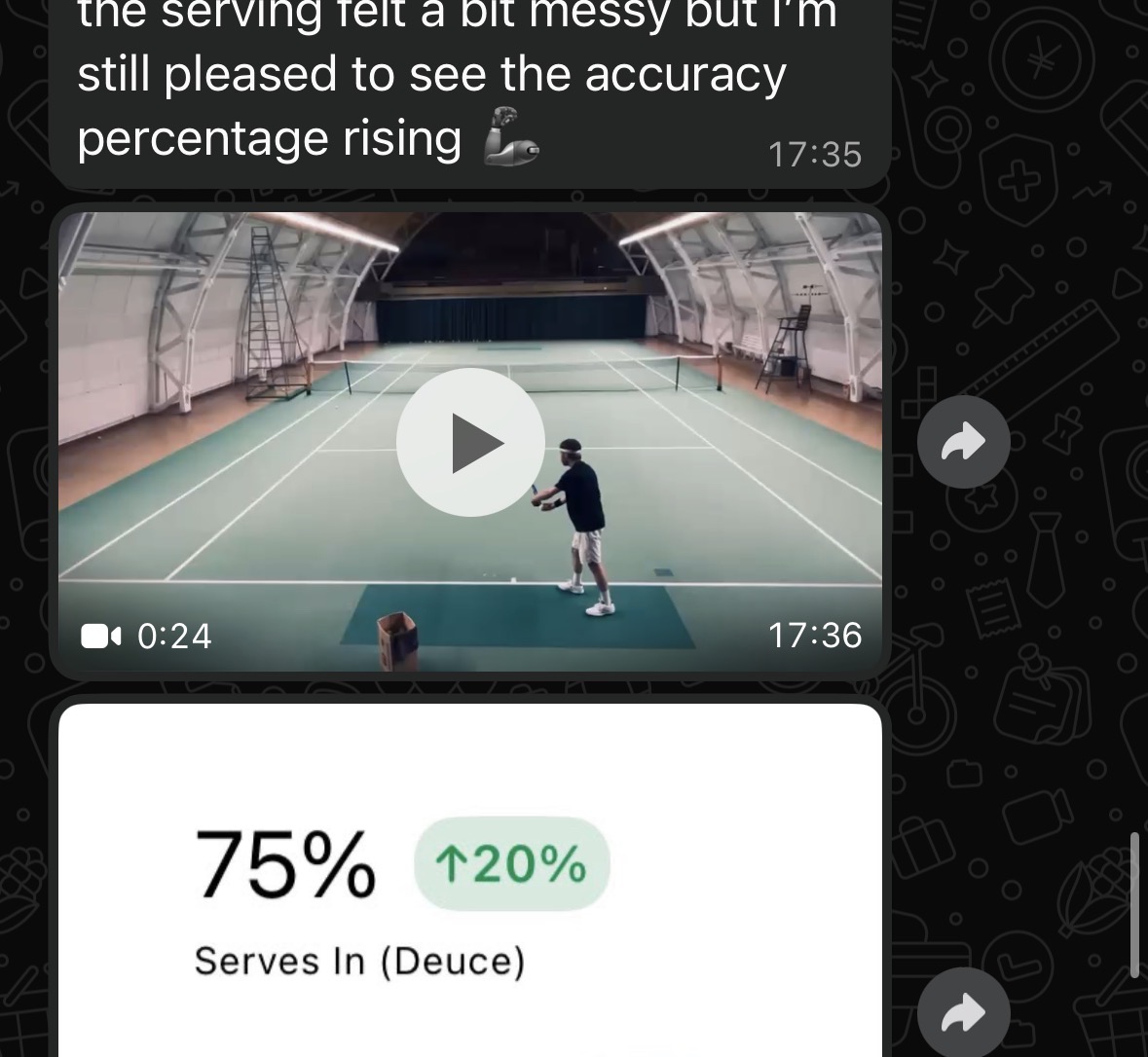
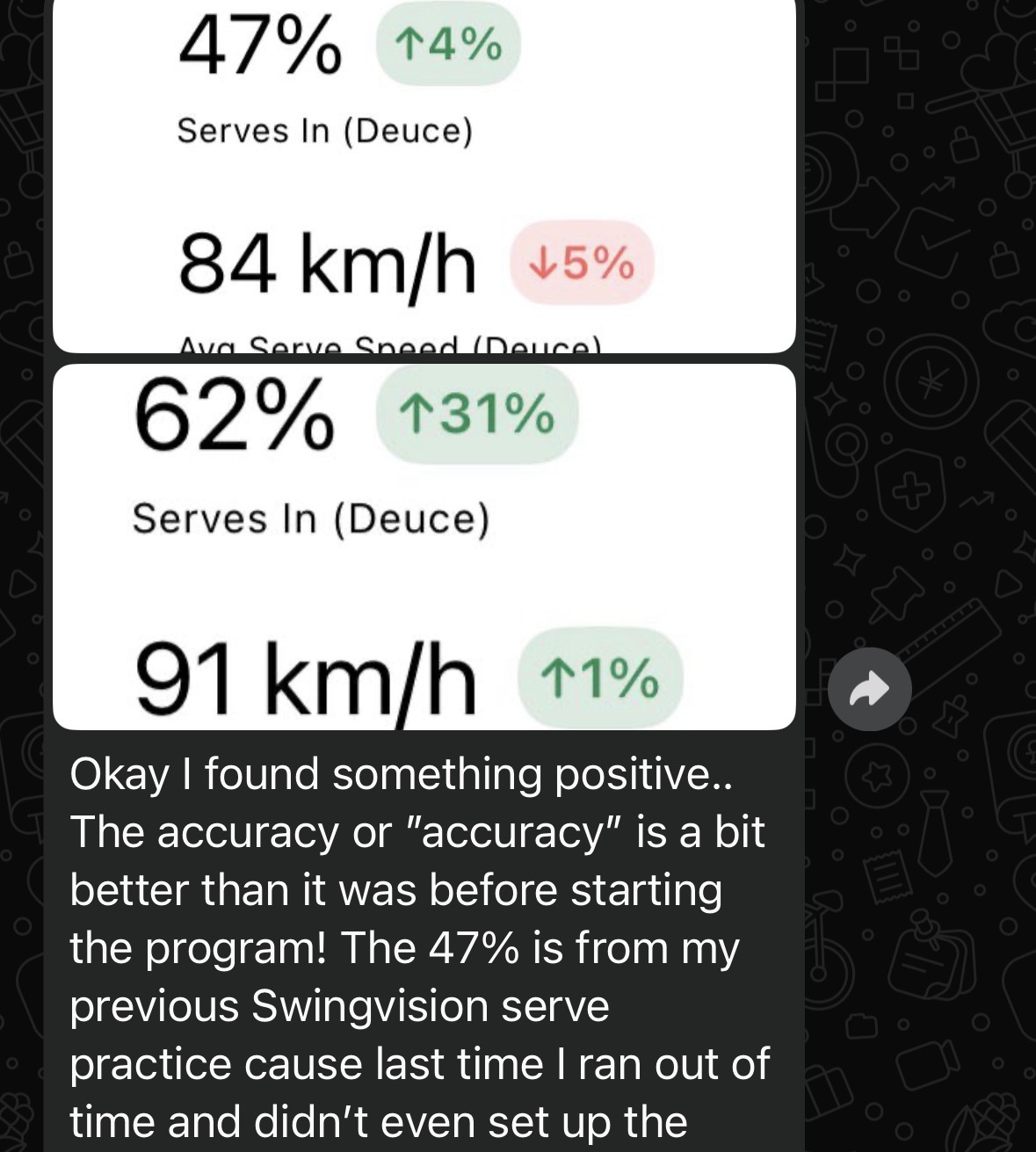
Tenho — First-Serve Consistency47% → 75% first serves in, over three weeks

SwingVision measurements documented the improvement as his serve mechanics developed.

Tenho's SwingVision stats before: 47% first serves in
Tenho's SwingVision stats after: 75% first serves in
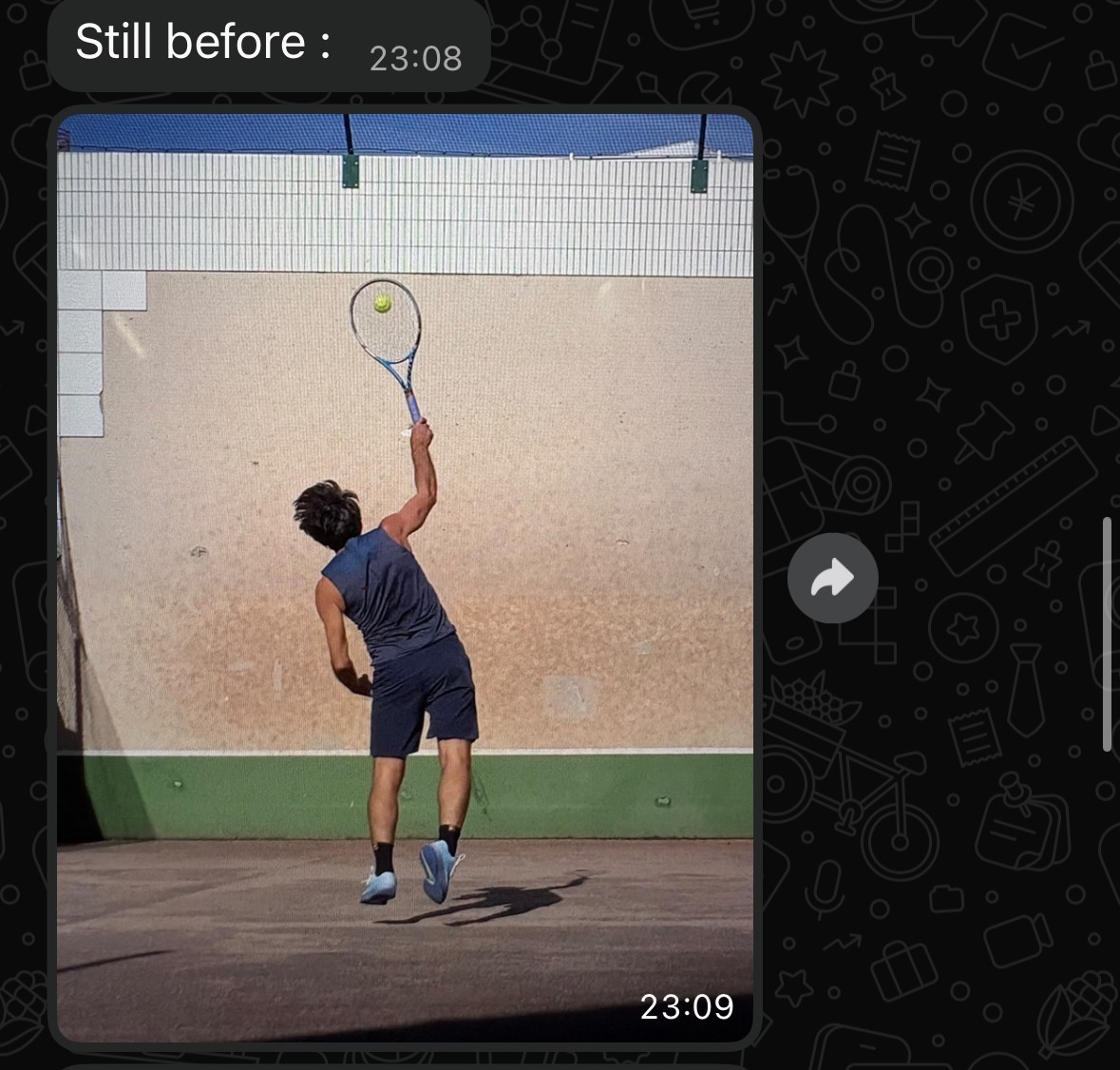
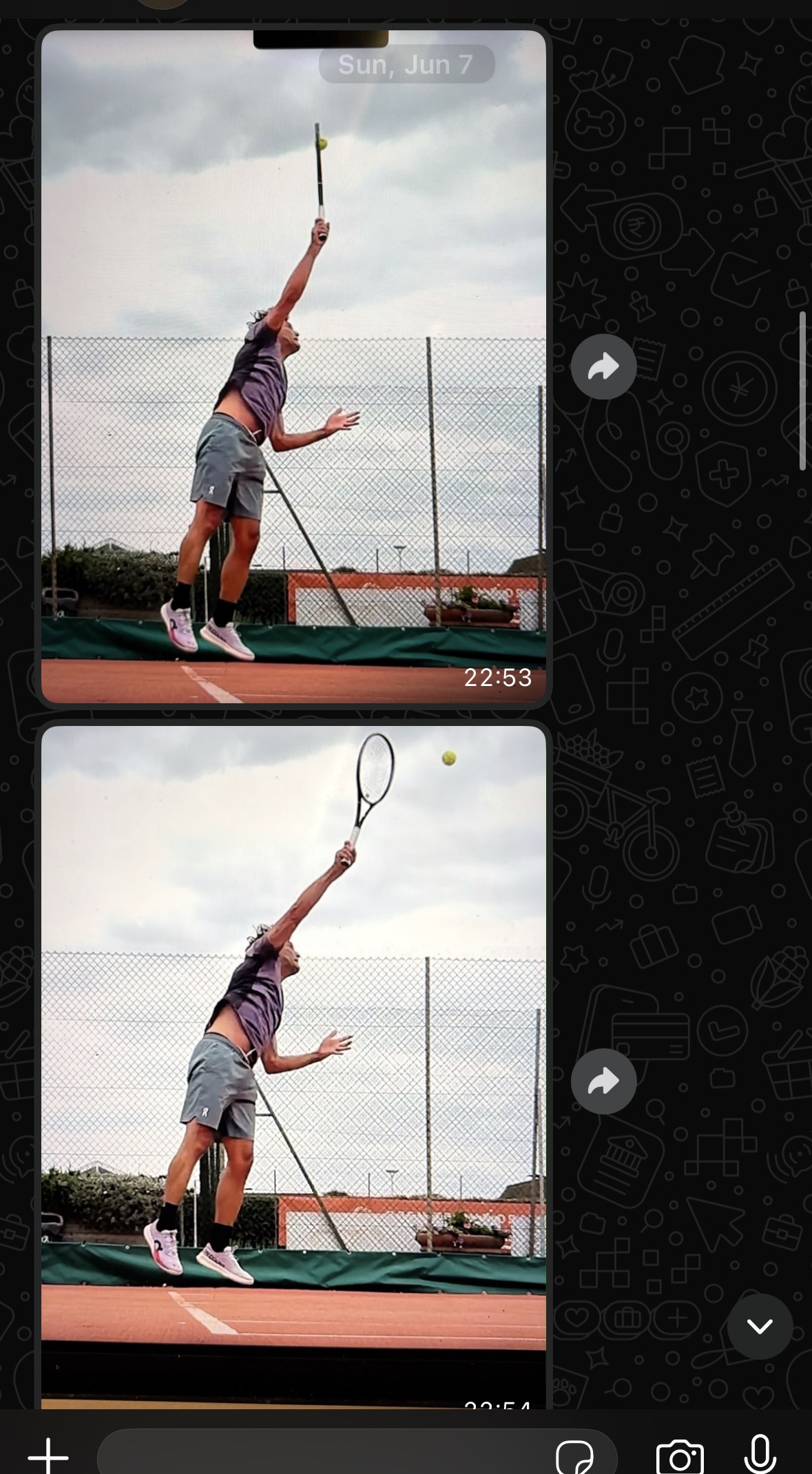
Lionel — Changes His Own Coach NoticedHis in-person coach noticed the difference after six weeks

After years of struggling with recurring technical problems, Lionel began making changes through structured serve training. Six weeks into the process, his in-person coach noticed the difference without being told about the online coaching.

Lionel's serve before
Lionel's serve after
Derek — Full Racket DropFrom no racket drop to a full racket drop

Derek’s serve had no real racket drop. The cause wasn’t technique alone: we uncovered a limitation in his shoulder range of motion. Once he trained that, the full racket drop followed.

Derek's serve before: no racket drop
Derek's serve after: full racket drop
John — No More Pancake ServeGot rid of his pancake serve

John was hitting a flat, pushed “pancake” serve. By building good pronation into his motion, he got rid of it.

John's serve before: pancake serve
John's serve after: good pronation

These are individual coaching results, not guarantees. The improvements shown came through training over time, not from the free diagnosis alone.

Another Correction Won’t Help If You Can’t Make the Movement Happen.

Imagine two players with the same problem: a shallow racket drop.

From the outside, their serves may look almost identical.

Player A
Visible mistake
Shallow racket drop
Possible cause
Struggles with shoulder mobility or movement control
Player B
Visible mistake
Shallow racket drop
Possible cause
Has the physical capacity, but loses the movement when accelerating toward the ball
Same visible mistake. Potentially different causes. Different training needs.

That’s why copying a drill from YouTube, or repeating a correction from a lesson, doesn’t always solve the problem.

You need to understand what is preventing your movement from changing.

And if you decide to work on that problem through ongoing coaching, the training needs to progress based on how you actually respond.

The exercise itself doesn’t have to look complicated. It has to address the right problem at the right stage.

Your free diagnosis is where we begin identifying that direction.

Is This Diagnosis Right for You?

This session is for adult tennis players who:

✓

Play regularly and want a more reliable, effective serve.

✓

Have already tried lessons, tutorials, or extra practice without lasting improvement.

✓

Keep seeing the same technical problems return.

✓

Want to understand why their serve breaks down, not just what looks wrong.

✓

Are willing to work on movement quality and follow a structured approach if that’s what improvement requires.

Probably not the right fit if:

✕

You’re a complete beginner learning to serve for the first time.

✕

You’re only looking for a quick trick to use in your next match.

✕

You’re not interested in changing how you practice or train.

✕

You’re expecting your serve to be completely rebuilt during a single free call.

If you’re serious about improving but don’t know what to fix first, this session is designed for you.

Toms Sutris
Toms Sutris
GPTCA / ATP Certified Tennis Coach

I’ve spent more than 10 years coaching tennis, including working with competitive juniors and high-performance players.

My background includes
  • Working as an assistant to Larisa Savchenko, former world No. 1 doubles player and Grand Slam-winning coach.
  • Serving as the main high-performance coach at the Angie Kerber Academy from 2021 to 2022.
  • Four years coaching one of Latvia’s top-ranked junior players.
  • Developing Boundless Tennis’s personalized online serve coaching program over the past two years.

One thing I’ve seen repeatedly throughout my coaching career is that players often understand the technical correction they’re being given. What they struggle with is turning that correction into a movement they can actually perform.

That’s why my approach focuses on understanding the cause of the problem and building the right progression to change it. And that’s exactly what we’ll investigate during your free diagnosis.

Here’s How to Get Your Free Serve Diagnostics

Step 1

Complete the Short Application

Tell me a little about your tennis, what you’re struggling with, and what you’ve already tried.

The application takes approximately two minutes.

Step 2

Share Your Serve Video

Upload a short recording of your serve so I can review it before our call.

A phone video of a couple of serves is enough. Any angle works, as long as your full motion is visible.

Step 3

Attend Your One-on-One Diagnosis

We’ll go through your serve together, investigate the main problems, and discuss the most useful direction for your training.

You’ll have the opportunity to ask questions throughout.

No generic group webinar. No automated serve report. Just a personal analysis of your serve.

No credit card required · Application takes approximately 2 minutes

Common Questions

Is the diagnosis really free?

Yes. There’s no charge for the 45-minute session and no obligation to purchase coaching.

Is this a sales call?

It’s a genuine serve-analysis session. I’ll review your footage, discuss what I find, and help you understand your next steps.

If I believe my personalized coaching program could help you, I may explain that option toward the end of the call.

You’re under no obligation to enroll.

Will my serve be fixed in 45 minutes?

No. Meaningful technical changes usually require practice and progression over time.

The purpose of the diagnosis is to help you understand what’s happening, investigate why, and identify where to begin.

How is this different from a regular tennis lesson?

Many lessons focus on correcting the visible technical mistake.

My diagnosis looks at what may be causing that mistake and why previous corrections haven’t produced lasting results.

For example, telling someone to increase their racket drop is different from understanding why they struggle to achieve that position during a full serve.

I’ve already tried lots of serve drills. How will this help?

We won’t begin by giving you another random drill.

We’ll first investigate your movement and what may be preventing the technical changes you’ve been trying to make.

The goal is to identify a better starting point for your training.

Do I need to be an advanced player?

No. The diagnosis is intended for adult players who play regularly and are serious about improving.

That includes motivated club players, league competitors, and tournament players.

It’s not intended for complete beginners learning the basic serving motion.

Do I need to stop working with my current tennis coach?

No. Many players benefit from continuing their regular tennis lessons while working specifically on their serve.

The diagnosis can help you understand what to prioritize in your future training.

What happens if I want further help after the diagnosis?

If we’re a good fit, I can explain my personalized online serve coaching program.

It’s not a fixed library of exercises. The training progresses based on your serve, your execution, and how you respond to the work.

The program includes on-court progressions, off-court movement training, and ongoing individual coaching.

Whether you choose to continue is entirely up to you.

What if you can’t identify the exact cause during the call?

I’ll be upfront about what I can and cannot determine from your footage.

Some problems involve multiple factors or require further observation. If that’s the case, I’ll explain what remains uncertain and what I’d recommend investigating next.

Your Serve Has Been Holding You Back Long Enough.

You’ve already put in the practice.

You’ve already heard the corrections.

Now find out what may actually be preventing your serve from improving.

Apply for a free, 45-minute one-on-one diagnosis and get a clearer understanding of what’s breaking down, why previous fixes may not have worked, and where to start.

Takes 2 minutes to apply · Personal video review · No credit card required

Sessions are offered based on coaching availability.

Apply for My Free Serve Diagnostics →